
Exploring the debate between Chapter 7 and Chapter 13 Bankruptcy, this introduction sets the stage for an in-depth analysis using a blend of formal language style that captivates readers right from the beginning.
Providing a comprehensive overview of both bankruptcy options and their implications will be the focus of the subsequent paragraphs.
Chapter 7 Bankruptcy
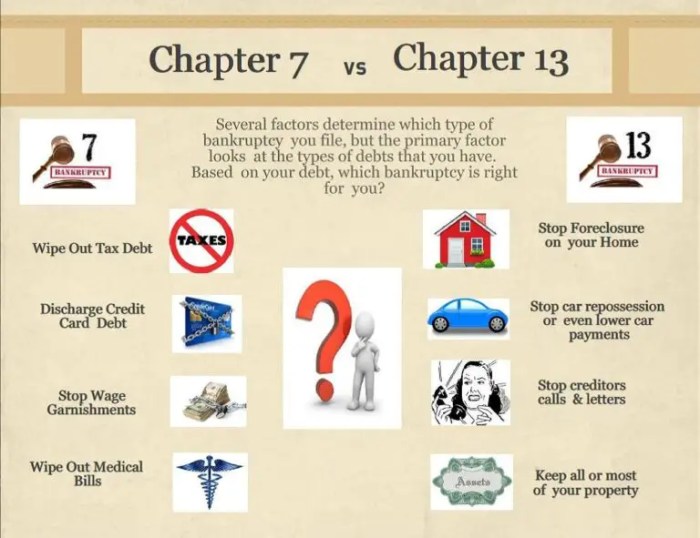
When individuals or businesses face overwhelming debt and are unable to repay their creditors, they may consider filing for bankruptcy. Chapter 7 bankruptcy is one of the most common forms of bankruptcy and involves the liquidation of assets to pay off debts.
Process of Filing for Chapter 7 Bankruptcy
Before filing for Chapter 7 bankruptcy, individuals must undergo credit counseling and pass a means test to determine their eligibility. Once approved, a trustee is appointed to oversee the liquidation of non-exempt assets to repay creditors. After the process is complete, most remaining debts are discharged.
Comparison to Chapter 13 in Debt Discharge
- Chapter 7 bankruptcy typically results in a quicker discharge of debts compared to Chapter 13, which involves a repayment plan lasting 3-5 years.
- Chapter 7 may require the liquidation of assets, while Chapter 13 allows individuals to keep their property and repay debts over time.
Eligibility Criteria for Chapter 7 Bankruptcy
- Individuals must pass the means test, which compares their income to the median income in their state. Those who fail the means test may be required to file for Chapter 13 instead.
- Previous bankruptcy filings or discharges may impact eligibility for Chapter 7 bankruptcy.
Types of Debts Discharged under Chapter 7
- Unsecured debts such as credit card debt, medical bills, and personal loans can typically be discharged under Chapter 7 bankruptcy.
- Some debts, such as student loans, tax debts, and child support payments, are usually not dischargeable in Chapter 7 bankruptcy.
Chapter 13 Bankruptcy
Chapter 13 bankruptcy, also known as reorganization bankruptcy, allows individuals with a regular income to create a plan to repay all or part of their debts over a period of three to five years. Unlike Chapter 7, which involves liquidating assets to pay off debts, Chapter 13 focuses on restructuring debt payments to make them more manageable for the filer.
Repayment Plan Structure
- Under Chapter 13 bankruptcy, the filer proposes a repayment plan to the court outlining how they will repay their debts over the designated period.
- The plan typically includes monthly payments to a trustee, who then distributes the funds to creditors according to the terms of the plan.
- Debts are prioritized in the plan, with secured debts (such as mortgages or car loans) often receiving full payment, while unsecured debts (like credit card debt) may only receive a portion of what is owed.
Advantages of Choosing Chapter 13
- One of the main advantages of Chapter 13 bankruptcy is that it allows individuals to keep their assets, such as a home or car, while still addressing their debts.
- Filers have the opportunity to catch up on missed mortgage or car payments through the repayment plan, helping them avoid foreclosure or repossession.
- Chapter 13 can also help stop collection actions, wage garnishments, and creditor harassment while the repayment plan is in effect.
Handling of Assets
- Unlike Chapter 7, where assets may be sold to repay debts, Chapter 13 allows individuals to retain their property as long as they adhere to the terms of the repayment plan.
- If the filer fails to make payments according to the plan, the court may dismiss the case, leading to potential loss of assets and a return to the original debt situation.
Eligibility Requirements
- To file for Chapter 13 bankruptcy, individuals must have a regular income that allows them to make monthly payments towards their debts.
- The filer's unsecured debts must be less than $419,275, and secured debts must be less than $1,257,850 to qualify for Chapter 13.
- Filers must also complete credit counseling with an approved agency before filing for bankruptcy.
Comparison Between Chapter 7 and Chapter 13
When considering bankruptcy options, it is essential to understand the key differences between Chapter 7 and Chapter 13. These two chapters of bankruptcy have distinct impacts on credit scores, benefits in certain situations, lengths of the bankruptcy process, and effects on asset retention.
Credit Score Impact
Chapter 7 bankruptcy typically remains on a credit report for up to 10 years, leading to a significant negative impact on credit scores. On the other hand, Chapter 13 bankruptcy may stay on a credit report for 7 years but allows individuals to start rebuilding their credit sooner through a structured repayment plan.
Beneficial Situations for Chapter 7
Choosing Chapter 7 over Chapter 13 may be more beneficial when individuals have minimal assets they wish to protect, unmanageable debt that cannot be feasibly repaid, or when seeking a quicker resolution to their financial issues. Chapter 7 is often preferred for those with lower income levels and fewer assets.
Length of Bankruptcy Process
Chapter 7 bankruptcy typically concludes within a few months, providing a relatively quicker fresh start for individuals. In contrast, Chapter 13 bankruptcy involves a repayment plan that lasts 3 to 5 years, allowing debtors to catch up on missed payments gradually.
Asset Retention
Chapter 7 bankruptcy may require the liquidation of non-exempt assets to repay creditors, potentially putting assets like a home or car at risk. In comparison, Chapter 13 allows individuals to keep their assets while catching up on overdue payments through a court-approved plan.
Final Review
Wrapping up the discussion on Chapter 7 vs Chapter 13 Bankruptcy, this conclusion will tie together key points and leave readers with a lasting impression of the topic.
Question Bank
What debts are typically discharged under Chapter 7 Bankruptcy?
Most unsecured debts such as credit card balances, medical bills, and personal loans are usually discharged under Chapter 7.
How does the repayment plan in Chapter 13 differ from Chapter 7?
Chapter 13 involves a structured repayment plan over a period of 3-5 years, while Chapter 7 typically does not require a repayment plan.
Which bankruptcy option is more suitable for individuals with stable income?
Chapter 13 may be more suitable for individuals with a steady income as it allows for a structured repayment plan, unlike Chapter 7.
Can Chapter 7 bankruptcy help in keeping assets like a home or a car?
In some cases, Chapter 7 may allow individuals to keep their home or car if they meet certain criteria and exemptions.