
Exploring the timeline of a personal injury claim in the US, this introduction sets the stage for a comprehensive discussion on the factors, stages, and durations involved. From complexities to settlements, this topic sheds light on the intricacies of the legal process.
Factors Affecting the Timeline
When it comes to the duration of a personal injury claim, several key factors can significantly impact how long the process takes. Understanding these factors can give insight into why some claims may take longer than others.
Case Complexity
The complexity of a personal injury case can greatly influence the timeline for resolution. Cases involving multiple parties, extensive injuries, or disputed liability can take longer to settle due to the need for thorough investigation and legal proceedings.
Settlement Negotiations
The negotiation process between the parties involved plays a crucial role in determining how long a personal injury claim will take. If both parties are unable to reach a settlement agreement quickly, the case may proceed to litigation, further prolonging the timeline.
Type of Injury
The type and severity of the injury sustained in a personal injury claim can also impact how long the claim takes to resolve. For example, claims involving catastrophic injuries that require ongoing medical treatment and rehabilitation may take longer to settle due to the need for comprehensive documentation and evaluation.
Typical Stages of a Personal Injury Claim
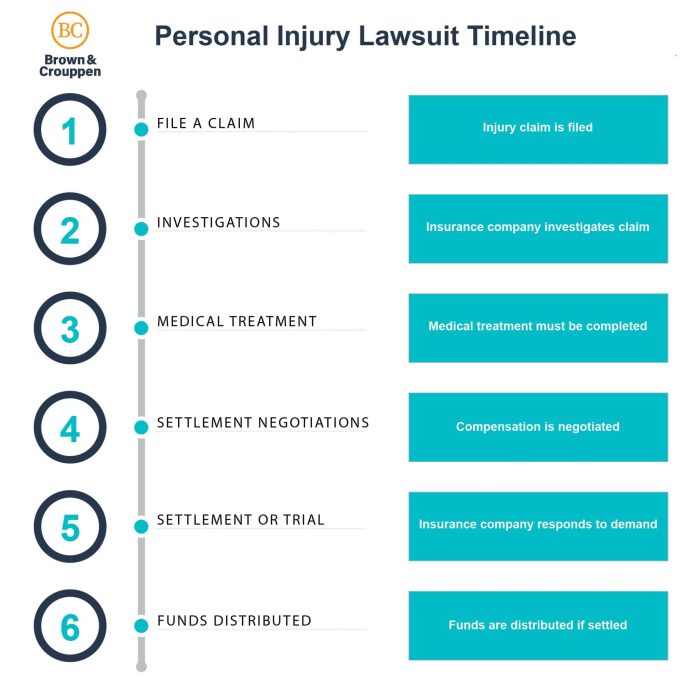
When a personal injury claim is filed, there are several standard stages that are typically involved in the process. These stages help determine the timeline of the claim and can vary depending on the specifics of each case.After filing a personal injury claim, the initial steps usually involve gathering evidence, evaluating the extent of the injuries, and determining liability.
This is crucial in building a strong case to support the claim for compensation.Investigations play a significant role in the timeline of a personal injury claim. Conducting thorough investigations, collecting medical records, obtaining witness statements, and assessing damages all contribute to the duration of the claim process.Negotiations with insurance companies or the at-fault party are common in personal injury claims.
These negotiations can sometimes lead to a settlement without the need for a trial, which can help expedite the resolution of the claim. However, if a fair settlement cannot be reached, the claim may proceed to trial.Potential trials can significantly impact the timeline of a personal injury claim.
Court schedules, legal procedures, and the complexities of the case can all influence how long it takes to reach a resolution through a trial.The role of medical treatment and recovery is vital in the duration of a personal injury claim.
The progress of medical treatment, rehabilitation, and overall recovery can impact the timeline of the claim, as it is essential to have a clear understanding of the extent of the injuries and the long-term effects they may have on the individual's life.
Average Duration Across Different Types of Claims
When it comes to personal injury claims, the duration can vary significantly depending on the type of claim and the circumstances surrounding it. Different types of claims, such as car accidents, medical malpractice, and slip and fall accidents, have their own unique timelines for resolution.
Understanding these differences can help individuals manage their expectations and navigate the legal process more effectively.
Car Accidents
Car accident claims are one of the most common types of personal injury claims. On average, a car accident claim can take anywhere from a few months to a few years to reach a resolution. The timeline can be influenced by factors such as the severity of the injuries, the complexity of the case, and the willingness of the insurance companies to negotiate.
Medical Malpractice
Medical malpractice claims involve allegations of negligence or misconduct by healthcare providers. These claims tend to be more complex and time-consuming compared to other types of personal injury claims. On average, a medical malpractice claim can take several years to resolve due to the need for extensive investigation, expert testimony, and legal proceedings.
Slip and Fall Accidents
Slip and fall accidents typically involve premises liability claims against property owners or managers. These claims can vary in duration depending on the circumstances of the accident and the extent of the injuries sustained. On average, a slip and fall accident claim can take anywhere from a few months to a year to reach a settlement or verdict.
Impact of Legal Representation
The choice of legal representation can have a significant impact on the speed at which a personal injury claim is resolved. Experienced and skilled attorneys may be able to expedite the process by negotiating effectively with insurance companies, gathering evidence efficiently, and advocating for their clients' rights in court.
On the other hand, inexperienced or inefficient legal representation may prolong the duration of the claim and lead to delays in reaching a resolution.
Delays and Strategies to Expedite the Process
Delays in personal injury claims can be frustrating for all parties involved. It is essential to identify common reasons for these delays and explore strategies to expedite the resolution of a claim.
Common Reasons for Delays
- Insurance company investigations
- Complexity of the case
- Medical treatment and evaluation
- Legal disputes and negotiations
Strategies to Expedite the Process
- Open communication with your attorney
- Promptly provide all necessary documents and information
- Consider alternative dispute resolution methods
- Stay organized and follow up regularly
Significance of Cooperation Between Parties
Cooperation between all parties involved in a personal injury claim is crucial for expediting the process. When everyone works together towards a resolution, delays can be minimized, and the claim can be resolved more efficiently.
Proactive Measures to Avoid Delays
- Seek immediate medical attention after an injury
- Keep detailed records of all medical treatments and expenses
- Follow your attorney's advice and instructions diligently
- Respond promptly to any requests or communications related to your claim
Final Summary
In conclusion, understanding the timeline of a personal injury claim is crucial for individuals navigating through legal proceedings. By grasping the various factors and stages involved, one can approach such claims with knowledge and awareness.
FAQ
How do settlement negotiations impact the timeline of a personal injury claim?
Settlement negotiations can either expedite or prolong the duration of a claim, depending on the willingness of parties to reach an agreement.
What role does medical treatment play in the duration of a claim?
Medical treatment is essential for documenting injuries and determining the extent of damages, which can affect the overall timeline of a claim.
How does the type of injury influence the length of a claim?
The severity and nature of the injury can impact the complexity of the case, thus affecting how long it takes to resolve.